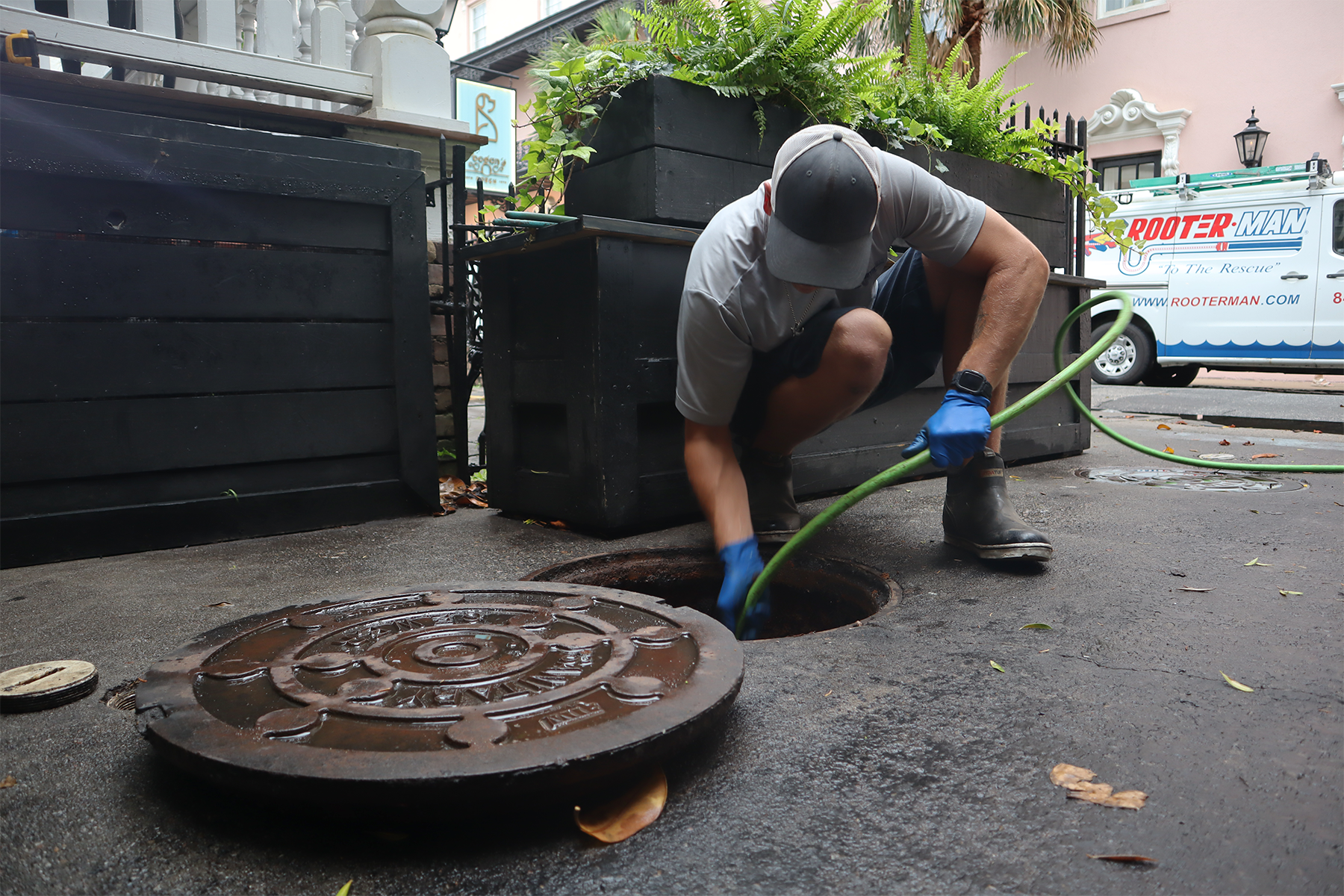
If your main line backs up during heavy rain, it usually isn’t random. Storm conditions tend to expose a line that already can’t move wastewater fast enough.
Buildup inside the pipe can narrow the usable opening, so it takes far less extra water to overwhelm the system. The risk isn’t only inconvenience. It’s water damage, cleanup, and the stress of not trusting your drains when weather turns.
The real decision is whether you’re paying for short-term relief or fixing why it keeps happening. A quick clearing can restore some flow, then the next storm proves nothing changed.
A deeper cleaning approach targets the residue that keeps shrinking capacity, which is what reduces repeat backups and the operational friction of repeated emergencies.
“Main line backup when it rains” — what’s actually happening?
Most rain-tied backups are capacity problems, not mystery events.
Heavy rain can increase inflow and infiltration, meaning groundwater can seep into cracked joints or defects, and some neighborhoods also see storm-related surges that stress shared systems. If your main line is already restricted, that extra load is enough to push it over the edge.
A key clue is multiple fixtures acting up at once. If toilets, tubs, and floor drains all slow down together, the bottleneck is often in the main line rather than a single branch drain.
Is it a one-time clog or a recurring capacity issue?
A one-time clog often has a clear trigger and a narrow symptom, like a single fixture that won’t drain. A recurring capacity issue shows up as patterns:
- Backups that hit during storms or after heavy water use
- Slow drains that improve briefly after service, then fade
- Gurgling sounds, especially after flushing
- Odors or water appearing at the lowest drain in the building
If this has happened more than once, treat it like a system problem, not a bad moment.
Hydro jetting vs. snaking: which one prevents repeat backups?
Snaking can be the right tool for certain blockages because it opens a path through the obstruction. The downside is that it may leave residue behind, especially grease, sludge, and buildup that clings to the pipe walls. That leftover material keeps narrowing the line, so the “open path” closes again under normal use.
Hydro jetting is different because it uses high-pressure water to scour the inside of the pipe. The goal is not just to punch through a clog, but to remove buildup from the walls and restore as much flow capacity as the pipe’s condition allows.
For recurring main line backups caused by buildup, that difference is often why one solution lasts longer than the other.
When should you search “hydro jetting near me” instead of calling for another quick clearing?
If you’ve already had the line cleared and the problem returns, it’s time to stop treating symptoms. Many people type “hydro jetting near me” after the second or third backup because they’ve realized the old approach keeps resetting the clock. Hydro jetting is often the smarter next step when:
- The same backup pattern keeps returning
- You suspect buildup, grease, sludge, or heavy residue in the line
- You want a cleaning method aimed at capacity restoration, not partial flow
- You’re trying to reduce emergency calls during storms
A practical note: results depend on using the right nozzle and approach for the pipe and blockage type. A real plan matches the method to what’s actually restricting the line, not just what’s easiest to run that day.
How do you know the problem is in the main line?
A main line issue usually affects the whole building, not just one sink. Watch for these signs:
- Water backs up in the lowest drain first (often a basement, crawlspace cleanout, or ground-level shower)
- Toilets bubble or gurgle when other fixtures drain
- Multiple drains slow at the same time
- Problems worsen after heavy rain or high water use
If only one fixture is acting up, the issue may be localized. If the whole system feels sluggish, the main line becomes the primary suspect.
When hydro jetting won’t solve it (and what that usually means)
Hydro jetting is a cleaning solution, not a structural repair. If the underlying issue is pipe condition, cleaning may help temporarily or not at all. Common examples include:
- A belly or sag that holds water and collects debris
- A collapse, severe offset, or broken section
- Heavy root intrusion that repeatedly returns without additional steps
- Severe deterioration where the pipe material is failing
This is why the “next step” matters. If cleaning is the right move, it should meaningfully change how the system performs under stress. If it isn’t, you need clarity before spending money twice.
What questions should you ask a hydro jetting provider?
Good questions reduce uncertainty fast and help you avoid paying for the wrong fix.
- How will you confirm it’s the main line and not an isolated drain?
- What type of buildup do you think is restricting flow?
- If cleaning won’t solve it, what would you recommend next and why?
- How will you access the line and protect fixtures during cleaning?
- What should change immediately after service if the cleaning worked?
Clear answers signal that you’re getting a decision-focused approach, not a one-size-fits-all upsell.
How RooterMan Upstate approaches recurring storm-related backups
At RooterMan Upstate, we help residential and commercial customers across the Upstate from our Spartanburg base. When a main line keeps backing up during heavy rain, we focus on two things: confirming whether the restriction is recurring, and choosing a cleaning method that targets the real limiter, usually buildup that’s reducing usable pipe diameter.
Hydro jetting is one of the tools we use for tough, repeat problems because it’s designed to clean the interior of the pipe, not just open a narrow channel. If your situation points to a structural issue that cleaning can’t fix, we’ll tell you directly so you can make the next decision with confidence.
Stop paying for repeat backups and restore reliable flow
Recurring backups during heavy rain are usually your system telling you it’s operating with less capacity than it needs.
The decision that changes outcomes is moving from reactive clearing to a cleaning approach that targets the residue causing the restriction, while staying realistic about pipe condition limits. If you’re at the point of searching “hydro jetting near me” because you’re tired of the cycle, it’s a good moment to get a clear diagnosis and a plan that holds up.
If you are ready to stop recurring main line backups and start restoring reliable flow capacity, reach out to us at RooterMan Upstate.