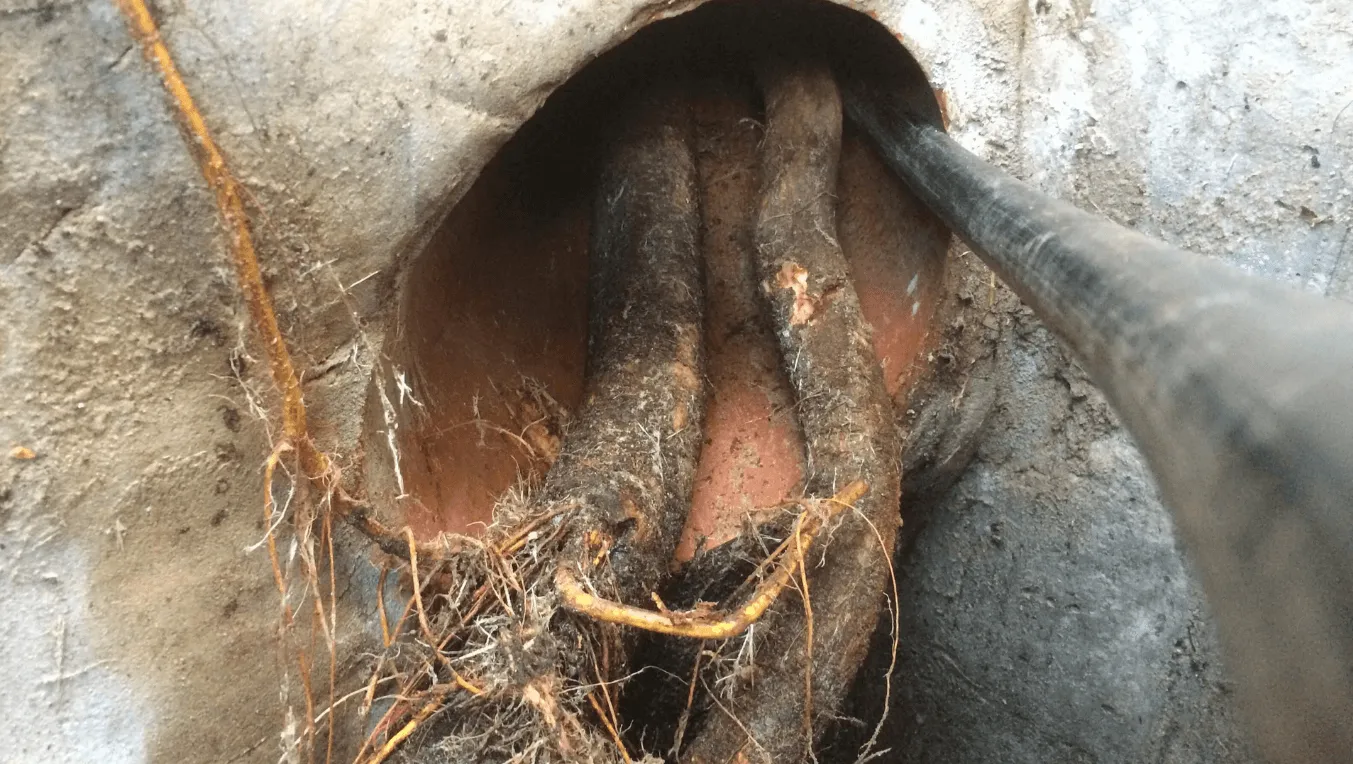
If you’ve cleared a drain and it clogs again, you’re not dealing with a one-time blockage. Tree roots behave differently than hair or a simple grease plug because roots typically get into a sewer line through an entry point, often at a joint, crack, or broken section. Until that opening is addressed, the symptoms can keep returning.
The decision is rarely just “snake or jet” as a generic choice. The real question is what outcome you need right now: a quick restoration of flow today, a deeper cleaning that buys more time, or a permanent fix that stops roots from coming back.
Choosing the wrong method can mean repeat backups, higher water damage risk, and paying for multiple visits instead of getting a clear plan.
Tree Roots in a Sewer Line: Why Snaking Often Doesn’t Hold
Snaking is great for many clogs because it can reopen flow fast. With roots, that restored flow can be temporary. Also, “snaking for roots” usually isn’t a small snake. It’s often a cable machine with a cutting head meant to chop and clear roots enough to get the line moving again.
That said, even a solid root-cutting pass can leave small root strands at the entry point, and those strands can snag toilet paper and debris. If the pipe is still compromised, roots can regrow and the line can go from improved to slow to backed up again. Flow restored doesn’t automatically mean the root problem is solved.
When Is Hydro Jetting Better Than Snaking for Root Intrusion?
Hydro jetting becomes the smarter choice when the goal is to clean the full interior of the pipe, not just cut an opening through the roots. It’s especially helpful when root intrusion and buildup are working together, because buildup on the pipe walls gives debris more to cling to and can make the line “catch” again faster after it’s been opened.
You’re more likely to need hydro jetting if:
- The same drain clogs repeatedly in a short period
- Multiple fixtures are slow or backing up, suggesting a main line issue
- Cable root cutting “works,” but the problem returns fast
- You suspect buildup along the walls is contributing to repeat clogs
- You want a cleaner reset after roots are cut back, before deciding on repair, lining, or replacement
Many people type “hydro jetting near me” after the second or third recurrence because they’ve realized the quick flow restore isn’t lasting. That’s often the right instinct, as long as the pipe is suitable for jetting and you’re not using it as a substitute for fixing a broken section.
Signs the Problem Is the Main Line, Not a Simple Fixture Clog
Roots usually show up as patterns, not a single event. Watch for:
- Gurgling toilets or drains after flushing or draining a tub
- Slow drainage across more than one area of the home
- Backups after using the washer, dishwasher, or multiple showers
- Sewage odors near drains or in the yard
- Recurrence soon after a drain cleaning
If you’re seeing multiple symptoms at once, treat it like a main line problem until proven otherwise.
Should You Get a Camera Inspection Before Hydro Jetting?
A camera inspection is one of the best ways to avoid guessing, but the line usually has to be open enough to inspect. If the line is actively clogged with roots and debris, you often can’t get a useful visual because the camera can’t pass the blockage or can’t see the pipe condition clearly.
A practical approach is:
- Clear the line enough to restore flow (often with a cable machine and root-cutting head)
- Then run a camera inspection to answer three practical questions:
- Where is the root entry point? A single trouble spot calls for a different plan than intrusion along a long run.
- What condition is the pipe in? Old, offset, corroded, or already-damaged pipes require more caution.
- Is there a structural failure? If roots are entering through a break or separated joint, cleaning alone won’t be a long-term fix.
Hydro jetting can be a great follow-up after the line is opened and evaluated, but jetting as a first step without a clear plan to verify pipe condition is where homeowners can end up paying for the wrong solution.
Can Hydro Jetting Damage Old Pipes?
Hydro jetting is not automatically dangerous, but it’s not a blind “one setting fits all” service either. Pipe material, age, joint condition, and existing damage all matter. In fragile or already-damaged lines, aggressive jetting can worsen weaknesses.
If your home has older lines, the smart approach is:
- Open the line first if needed
- Verify the pipe condition once it’s passable and visible on camera
- Match nozzle choice and pressure strategy to the pipe material and condition
- Avoid forcing jetting if the camera shows a break, collapse, or severe separation
If a contractor can’t explain how they adjust the approach to the specific pipe, that’s a red flag.
Hydro Jetting vs Root Cutting: What’s the Difference?
Root cutting and hydro jetting solve related problems, but not the same one.
- Root cutting targets the root mass to reopen the line and restore flow.
- Hydro jetting cleans the pipe walls and flushes out residual debris and buildup that can speed up the next clog.
In some cases, both are used in sequence: cut roots to reopen the line, then jet to wash the line clean. The best method depends on how severe the intrusion is, how much buildup exists, and what the camera shows once the line is open enough to inspect.
What to Do Right Now If You’re Backing Up
If you’re actively dealing with a backup:
- Stop running water and limit flushing
- Don’t pour harsh chemicals into the line
- Note which fixtures are affected and when it started
- Call a professional who can open the line, then confirm the cause and recommend the right next step
The faster you move from “get it draining” to “confirm why it happened,” the less likely it turns into repeat emergencies or property damage.
Conclusion: Choose the Method That Stops the Cycle
Tree roots turn drain problems into repeat problems because they point to an entry point in the pipe. Cable root cutting can be a solid short-term reset, and hydro jetting can provide a deeper clean that often buys longer relief when buildup is part of the issue.
But if the camera confirms a broken section, separated joint, or other structural failure, the long-term fix is repair or replacement of that damaged area so roots can’t return.
If you’re ready to move from repeat clogs to a clear solution, request an appointment with RooterMan of Upstate.
Currently searching “hydro jetting near me”? We can help you confirm what’s happening in the line, clear it safely, and recommend whether jetting, repair, or replacement makes the most sense for your home.